
What A Self-Discovery Journey Reveals About Family, Fear, And Freedom

Self-discovery is often imagined as a quiet inward journey, journals, solitude, and reflection. But in reality, it is rarely separate from where we come from. It is shaped, interrupted, and sometimes even defined by family, fear, and the long search for freedom. Few memoirs capture this tension as vividly as Tales: Memoir and Poems of an American Woman by Shirley Rickett, where personal history becomes a mirror for larger human truths.
Family: The First Map of Identity
Family is our earliest language. It teaches us how to love, how to survive, and sometimes how to carry wounds we don’t yet understand. In Rickett’s memoir, family is not a simple structure; it is a web of migrations, generational hardship, and emotional complexity. From rural Kentucky roots to industrial Kansas City life, each relative becomes part of a living archive of resilience and contradiction.
What stands out is how identity is shaped not just by parents, but by extended figures, uncles, grandparents, and even absent or distant relatives. A single person, like Uncle John, can become a guiding light, offering books, stories, and stability in a world marked by uncertainty. Self-discovery begins here: in recognizing that who we are is deeply inherited, even when we try to step away from it.
Fear: The Invisible Thread Through Childhood
Fear in a self-discovery journey is not always dramatic. Sometimes it is subtle, woven into bedtime prayers, neighborhood dangers, or the unspoken tension in adult conversations. In Rickett’s memoir, fear appears in moments of instability, war-era anxieties, and the emotional unpredictability of family life.
Yet fear also becomes a teacher. It sharpens awareness. It forces questions like: Why do people suffer? Why do adults behave the way they do? What is safe in an unsafe world? These questions do not resolve quickly; instead, they evolve over time, becoming the foundation of emotional intelligence and moral reflection.
Fear, in this sense, is not the opposite of growth, it is part of it.
Freedom: Finding Voice Through Memory and Story
Freedom in self-discovery rarely arrives as a single breakthrough. It emerges slowly, often through expression. For Rickett, that expression comes through memoir and poetry, transforming lived experience into language, and language into understanding.
Freedom is found in the act of telling the story rather than being defined by it. Childhood confusion becomes adult insight. Pain becomes narrative. Memory becomes meaning. Even difficult experiences, poverty, instability, and emotional conflict are reshaped into creative clarity.
This is the essence of self-discovery: not escaping the past, but reclaiming it.
The Journey Inward Is Never Alone
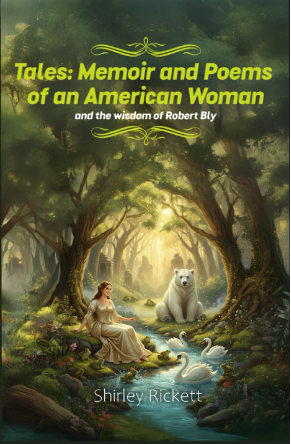
If this reflection resonates with you, Tales: Memoir & Poems of an American Woman and the Wisdom of Robert Bly by Shirley Rickett is a good read.
Inside the book, memoir and poetry intertwine to reveal a life shaped by Depression-era hardship, Midwestern family dynamics, wartime America, and the lifelong search for meaning. Through vivid storytelling and lyrical reflection, Shirley Rickett explores what it means to grow up inside history, and to eventually step outside it through language.
Get your copy today to experience a powerful blend of memoir and poetry that turns lived experience into lasting insight and invites you to reflect on your own path of self-discovery.